

Where to Sell my Business
A Strategic Owner's Guide to Confidentiality, Valuation, and Deal Certainty
Unlike selling a house or a car, selling a business isn't as simple as posting a listing and waiting for offers to roll in. A successful transaction requires a delicate balance of confidentiality, qualified capital, and clear valuation, three foundational factors where informal platforms often fail. Utilizing the wrong sales channel can lead to public leaks, lowball offers, and operational instability.
While there are plenty of places to advertise a business for sale, not all of them are created equal. So, where should you start?
Successful Venues for Selling a Business
Choosing the right channel depends heavily on your industry, business size, your goals, and how involved you want to be in the sales process. The most reliable pathways include:
1. Business Brokers & M&A Advisors
For most business owners, working with a business broker is the most practical place to start. It works particularly well for brick-and-mortar stores, service companies, or complex small businesses.
Why it Works: An experienced broker does more than put your business in front of potential buyers. They help determine what it's worth, market it confidentially, screen interested buyers and guide the transaction from the first conversation through closing. That last part is especially important. Selling a business involves financial reviews, negotiations, financing, attorneys and plenty of unexpected questions along the way.
A broker helps coordinate those moving pieces while you stay focused on running your business.
The Trade-off: There are commissions involved, but the right guidance can maximize your sale price, save you time, help protect your business and keep a promising deal from falling apart.
2. Dedicated Business-for-Sale Marketplaces
You've probably seen websites advertising businesses for sale. Dedicated marketplaces can be a useful option for smaller businesses, online companies or owners who want to manage the selling process themselves.
Why it Works: These platforms put your business in front of people who are actively looking to buy. Some offer valuation tools, confidentiality agreements and buyer-screening features. Others specialize in online businesses and offer ways to verify financial performance.
The Trade-off: Listing a business doesn't guarantee qualified buyers. You may spend considerable time answering questions, reviewing offers and sorting through people who aren't financially prepared to purchase. You'll also be responsible for managing much of the process yourself, from protecting confidential information to coordinating the transaction.
3. Direct Outreach
Sometimes the right buyer is closer than you think. A competitor might want to expand. A supplier or business partner may see an opportunity. A long-term employee could be interested in taking over. Reaching out to competitors, strategic partners, suppliers or key employees can sometimes lead to a successful sale without putting the business on the open market.
Why It Works: These buyers may already understand your industry, customers and operations, which can make the transition easier. And if you already have a potential buyer in mind, you may be able to avoid some of the time and expense involved in marketing the business more broadly.
The Trade-off: Approaching the wrong person too early can put confidentiality at risk, potentially leading to uncertainty among employees, customers or competitors. You may also limit your opportunities by negotiating with only one potential buyer. Even when you have someone interested, it’s important to understand what your business is worth and have experienced advisors help structure the deal.
Where Not to Sell a Business
Just because you can advertise your business somewhere doesn't mean you should. High-traffic, general platforms might be great for selling furniture or equipment, but listing your business on them comes with severe risks.
1. Craigslist
Classified websites can be great for selling equipment, furniture or other business assets. But selling a business itself is a different story.
Why It's Risky: Craigslist offers no confidentiality protection, which is a major problem. Publicly listing your business for sale can alert employees, customers and competitors to your plans before you're ready, potentially creating uncertainty and hurting your business's value. You may also find yourself fielding lowball offers, scams or inquiries from people who aren't serious about buying.
The Exception: If you're closing a business and simply need to sell equipment, machinery or other individual assets, Craigslist may be useful. But it's generally not the right place to sell an operating business.
2. Facebook Marketplace & Social Media Groups
Social media can help you reach a lot of people quickly, but public social media marketplaces aren't built for complex business acquisitions.
Why It's Risky: Unlike dedicated business-for-sale platforms, Facebook Marketplace isn't designed to manage confidential financial information, screen qualified buyers or coordinate complex transactions. Plus, while you may generate plenty of inquiries, many won't come from qualified buyers. And don’t forget, public listings can make it difficult to keep your plans confidential.
The Exception: Niche, private LinkedIn or Facebook groups run by specialized trade associations can sometimes yield serious inquiries. Just be thoughtful about what information you share and with whom, and avoid the public social marketplace.
3. Commercial Real Estate Portals
Websites like LoopNet are designed primarily for buying, selling and leasing commercial property. These portals are excellent if your transaction includes high-value real estate such as a hotel or gas station but underperform if it does not.
Why It’s Risky: These platforms primarily attract property investors rather than people looking to operate a business. If you're selling a service company or another business without significant real estate, you may have a harder time reaching the right buyers. Additionally, these sites don’t prioritize confidentiality and require addresses in order to post a property.
The Exception: If the value of your business lies primarily in the commercial property and you are not concerned with confidentiality, these platforms may be a good choice.
Channel Comparison at a Glance
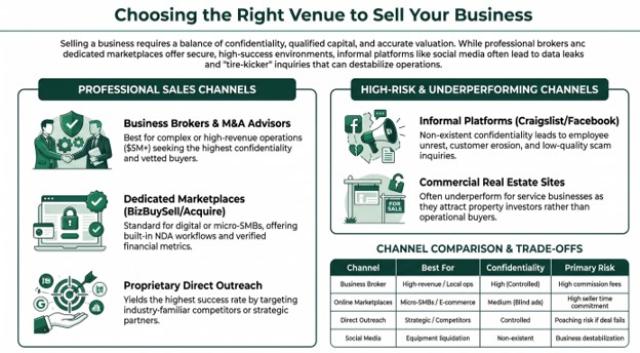
So, Where Should You Sell Your Business?
It's tempting to think that getting your business in front of as many people as possible will lead to the best offer. But more inquiries don't always mean better opportunities.
The best place to sell your business depends on what you're selling, who your potential buyers are and what you hope to accomplish. For most established small businesses, a business broker can help bring those pieces together, combining targeted marketing, qualified buyer outreach and hands-on guidance throughout the transaction.
At Calhoun Companies, we help business owners understand their options, find qualified buyers and navigate the selling process with confidence. Whether you're ready to sell now or just beginning to think about what's next, let's start the conversation.