
How to Sell a Baby Boomer Business
For years, we've been hearing about the coming wave of baby boomer business owners looking to retire and sell their businesses.
People prepared, and then waited.
And waited.
And waited some more.
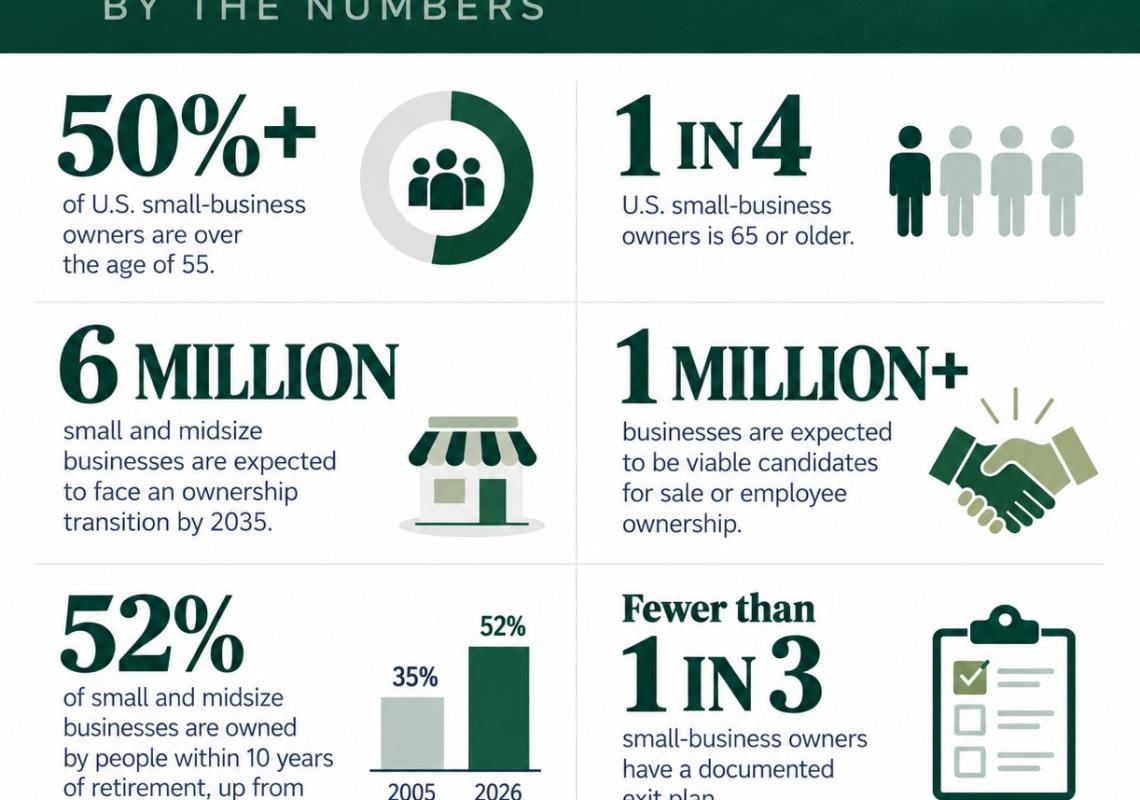
The so-called “silver tsunami” has been predicted for well over a decade. But while the wave hasn't arrived as dramatically as expected, the demographics are getting harder to ignore. Today, more than half of U.S. small-business owners are over the age 55, and one in four is 65 or older. By 2035, an estimated six million small and midsize businesses could face an ownership transition. More than one million of those businesses may be viable candidates for sale, representing as much as $5 trillion in business value.
So, is the long-awaited wave of baby boomer business sales finally here? Maybe.
But if you're a baby boomer thinking about selling your business, the more important question is whether you'll be ready when it's your turn.
Don't Wait Until You're Ready to Retire
Ideally, preparing to sell should begin one to two years before you actually want to leave. That gives you time to clean up financials, strengthen operations, address potential problems and make the business more attractive to buyers.
It also gives you options. Waiting until you're simply done, or worse, facing a health emergency, can put pressure on you to take whatever offer comes along rather than waiting for the right deal.
Make Sure the Business Can Run Without You
For many baby boomer business owners, the company has been part of their lives for 20, 30 or even 40 years. Customers know them. Employees rely on them. They may still approve every major decision. That's an incredible legacy, but it can also be a liability when it's time to sell.
Start transferring customer relationships, documenting processes and giving key employees more responsibility well before you sell. The easier it is for a buyer to see the business succeeding without you, the more valuable your business is.
Bridge the Generation Gap
Years ago, we wrote about how to buy a baby boomer business, including the importance of younger buyers understanding and respecting what the previous generation built. But that works both ways.
Younger prospective buyers are bringing different expectations to the table. For example, 84% say they're more attracted to businesses that already operate digitally. You don't need to completely reinvent your company. But decades-old software, manual processes or systems that exist only in the owner's head can make an otherwise attractive business look like a much bigger project.
Know What Your Business Is Really Worth
After decades of building a company, it's natural to have a number in mind for what it should be worth. But buyers see it differently. They're looking at cash flow, financial performance, growth potential, owner dependence, risk, etc. The memories, sacrifices and years you put into building the business matter enormously to you, but they don't translate into market value.
Getting a realistic valuation before you're ready to sell can help you understand where you really stand.
Decide What a Successful Sale Looks Like
Getting the highest offer possible isn't always the only consideration you might have. You may care deeply about what happens to your employees. You may want the business name to continue. You may want to find someone who shares your vision. Think about those priorities before you begin looking for a buyer.
There's a big difference between finding a buyer and finding the right buyer for the business you've spent decades building.
So, Is the Baby Boomer Business Sell-Off Finally Here?
It certainly looks closer. McKinsey estimates that annual small-business exits could eventually reach 665,000 per year. But more businesses coming to market doesn't guarantee more successful sales. In fact, McKinsey found that historically, closure has been a far more common outcome than a successful sale. Of the roughly 510,000 small and midsize businesses it estimates exited the market in 2022, 92% closed, while only 5% were sold and another 3% transferred to new owners.
That's a pretty compelling reason not to leave your exit to chance.
If you're a baby boomer thinking about selling your business, start preparing now. A business that's financially strong, less dependent on its owner and ready for the next generation will be in a much better position, no matter when your time to sell actually arrives.